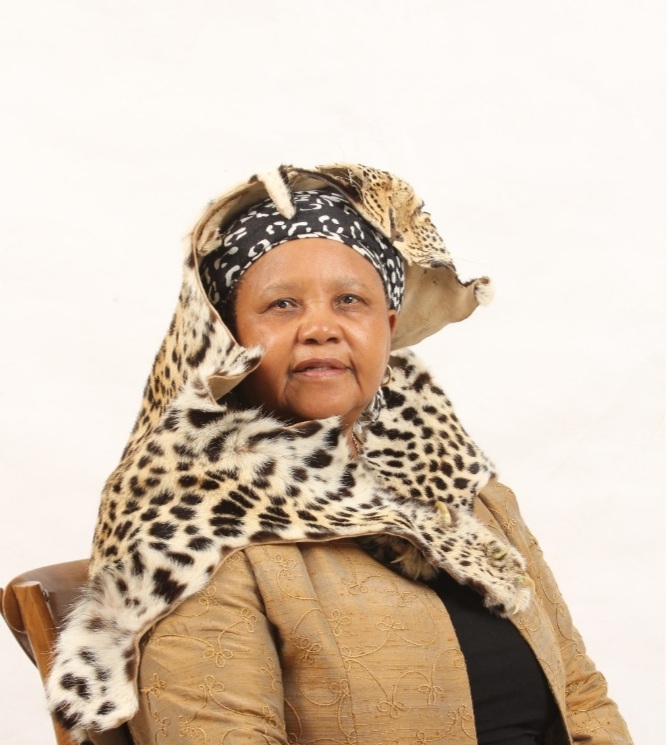
A Visionary Leader of Strength, Courage and Wisdom.
Born on 7 June 1950, Kgosi Mosadi Muriel Seboko is the Paramount Chief (Kgosikgolo) of the Balete people of Botswana. She made history on 7 January 2002 when she was installed as Kgosikgolo of the Balete, becoming the first woman to hold the position of permanent Kgosikgolo in Botswana’s history. Her installation secured her place among the distinguished lineage of African queens and female royal leaders who have shaped the history of the continent.
Her accession followed the passing of her elder brother, Kgosikgolo Seboko Seboko, who reigned from 1 June 1996 until 17 June 2001. Following a year of determined and persuasive engagement with both the royal family and the morafe (the Balete people), Mosadi Seboko was formally recognised by the Government of the Republic of Botswana as the rightful successor, based on her position as the first-born child of her family.
Her claim to Bogosi was founded on the principle of birthright equity. In recognising her succession, Botswana’s progressive legal and governance system affirmed its enduring commitment to equality, justice and democracy.
Kgosi Mosadi’s claim was strongly supported by her late mother, Mohumagadi Hadas Motlalepula Mokgosi, her six sisters, the Balete people, and many Batswana across the nation. Before her installation in 2002, Botswana had never appointed a permanent female Kgosikgolo. Her appointment therefore marked a defining moment in the country’s history, breaking centuries of an exclusively male tradition of Paramount Chiefs.
Leadership had long been evident in Kgosi Mosadi’s life from a young age. Following the passing of her father, Kgosi Mokgosi III, she assumed significant family responsibilities, supporting her mother and helping to ensure that her siblings received an education and were equipped to make meaningful contributions to Botswana in their respective fields.
Before assuming traditional leadership, she built an accomplished professional career in the private sector. She served as a senior executive at Barclays Bank Botswana and later as a manager at Century Office Supplies in Gaborone. These experiences strengthened the leadership, administrative and management skills that would later define her tenure as Kgosikgolo.
Her journey to leadership was not without opposition. Many of her critics challenged her suitability solely because she was a woman. Nevertheless, through diplomacy, unwavering principles, strong ethical leadership and a compassionate yet resolute approach, Kgosi Mosadi has helped dismantle long-standing discriminatory traditional practices and demonstrated that leadership is defined by character rather than gender.
Soon after her installation, her courage and resilience were put to an extraordinary test.
While the Balete people celebrated the installation of their new Kgosikgolo, a long-standing dispute spanning more than two decades intensified over Farm Forest Hill 9-KO, land wholly owned by the Balete Tribe. Rather than allowing the conflict to divide her people, Kgosi Mosadi pursued a measured and visionary approach by ensuring the matter was addressed through mediation and comprehensive legal representation involving both Balete legal practitioners and international legal experts.
Despite numerous accusations and challenges directed at both herself and the Balete people, she remained steadfast, presenting compelling evidence in support of the tribe’s rightful ownership of the land.
Her perseverance was ultimately rewarded in 2023, when justice prevailed. The courts of Botswana twice affirmed the Balete Tribe’s ownership—first through a High Court judgement and subsequently through a Court of Appeal ruling. These landmark victories stand as enduring evidence of her courage, determination and unwavering commitment to protecting the rights and heritage of her people.
Kgosi Mosadi Seboko’s leadership has earned widespread recognition both nationally and internationally. In 2003, she was elected Chairperson of the House of Chiefs (Ntlo ya Dikgosi). She also served two terms as Botswana’s representative delegate to the Pan-African Parliament, further strengthening her reputation as a respected stateswoman, counsellor and sought-after public speaker.
Throughout her leadership, she has remained committed to addressing some of Botswana’s most pressing social challenges. She has consistently spoken out on gender-based violence, the empowerment of women and young people, and the continuing impact of HIV/AIDS. While some critics accused her of “defending women”, Kgosi Mosadi responded that she was instead “angry at women for failing to exert more control over their own circumstances”. Her dedication to gender equality and social justice led to her election as the inaugural Chairperson of the National Gender Commission, a position she held from 2016 to 2021.
Beyond her public responsibilities, Kgosi Mosadi remains the matriarch of the extensive Seboko-Mokgosi family. She is the eldest of six sisters, the proud mother of four daughters, and grandmother to ten grandchildren, with her family continuing to grow.
Today, Kgosi Mosadi Muriel Seboko stands as one of Botswana’s most influential traditional leaders. Her remarkable journey—from pioneering constitutional change through birthright equity to safeguarding her people’s heritage and championing social progress—has established a lasting legacy of strength, courage, wisdom and visionary leadership that continues to inspire generations across Botswana and the African continent.